Why Do Turkish Towels Have Fringe?
Pick up almost any Turkish towel and the first thing your hand finds is the fringe: a row of knotted ends hanging off each short side. It looks decorative, and it is. But it started as a practical answer to a weaving problem. So why do Turkish towels have fringe? The short version: it's how the loose threads at the ends of a woven cloth get finished. Here's what's going on, how it shows up on a Salt Rag, and how to live with it.
By Salt Rag · · Updated 2026-10-10
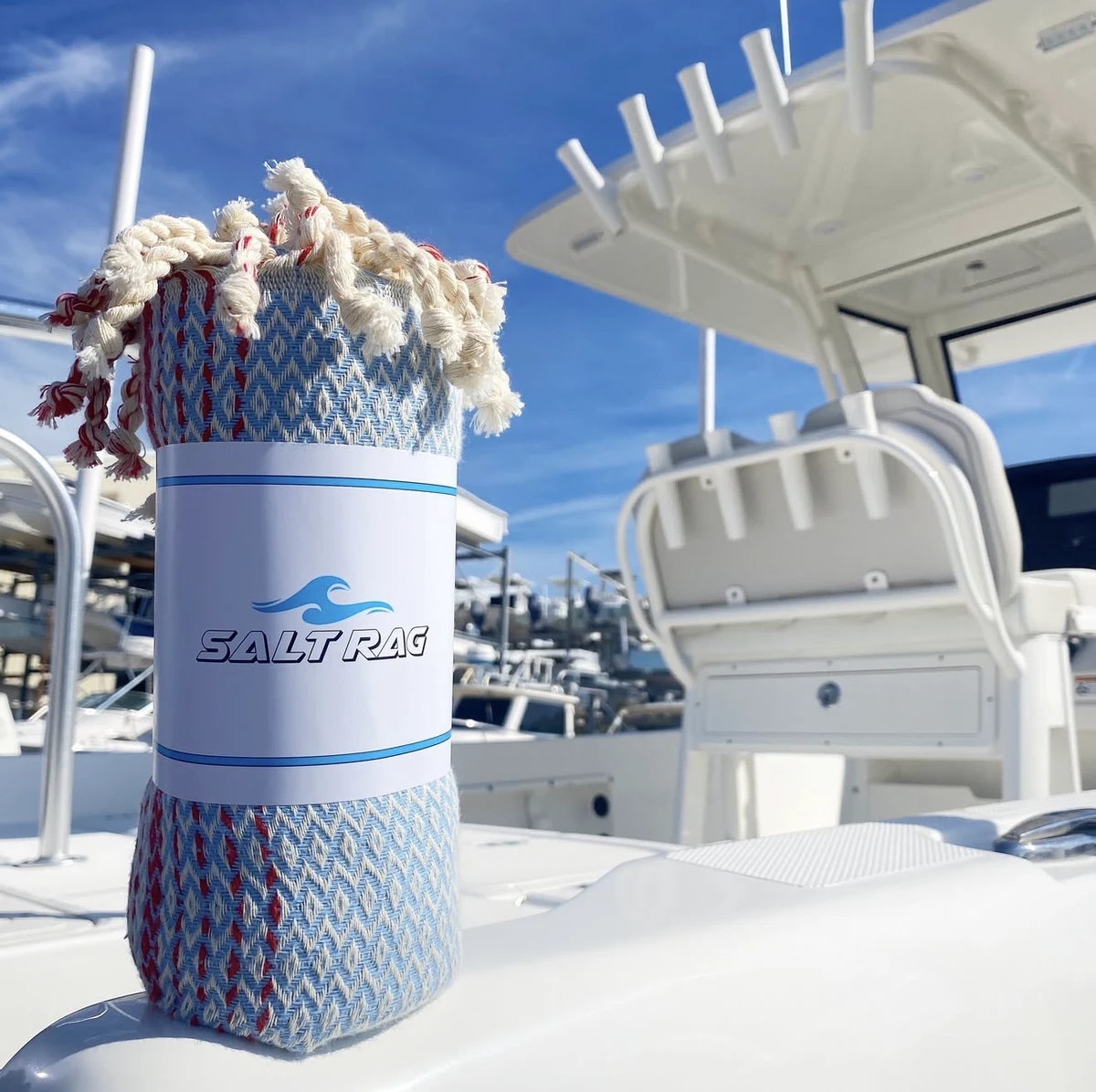
The short answer: why do Turkish towels have fringe?
Every woven cloth has two sets of threads. The warp runs lengthwise and is held under tension on the loom. The weft goes over and under the warp, back and forth, building the cloth row by row.
When a piece is finished and comes off the loom, the long sides are already tidy because the weft turns around at each edge. The short ends are different. That's where the warp threads were cut, and cut threads can work loose if nothing holds them.
There are a few ways to deal with that. One is to fold the end over and sew a hem. Another is to leave a length of warp hanging and gather it into small bundles, then knot each bundle so the last rows of weaving stay put. That second approach gives you fringe.
So fringe is, first of all, a finish. It keeps the end of the cloth from coming undone. The look came along with it.
From loom to knot
In general terms, making fringe looks something like this:
- Leave the warp long. When a section of cloth is done, the warp is cut with extra length left past the last row of weaving.
- Gather it. The loose ends are grouped into small bunches across the width of the cloth.
- Secure it. Each bunch is knotted, and sometimes twisted too, close to the edge so the weaving can't slide.
- Trim it. The ends are evened up so the fringe hangs in a clean line.
Exactly how this is done varies by workshop, loom and style. Some fringes are twisted into tight cords, some are left loose below a simple knot, and some cloths skip fringe for a hem. Fringed ends are a familiar part of the traditional Turkish towel, and that tradition is a big part of why people expect the look today.
Fringe on a Salt Rag: knotted on both short ends
Each Rag is hand-loomed in Kayseri, Turkey, from Turkish cotton, and knotted fringe finishes both short ends. That's the detail you'll see on every Rag: the two 40-inch ends finish in a row of knots and short tails, and the long 70-inch sides are the woven edges.
If you've read Read the Rag, you've seen fringe listed with the weave and color as one of the details worth knowing before you choose. On Why a Rag it's described as "a detail worth leaving out over a chair." We like that line, because it gets at the second job fringe does.
Fringe and the look of the cloth
A towel without fringe looks like a towel. A towel with fringe looks like it could be something else, too.
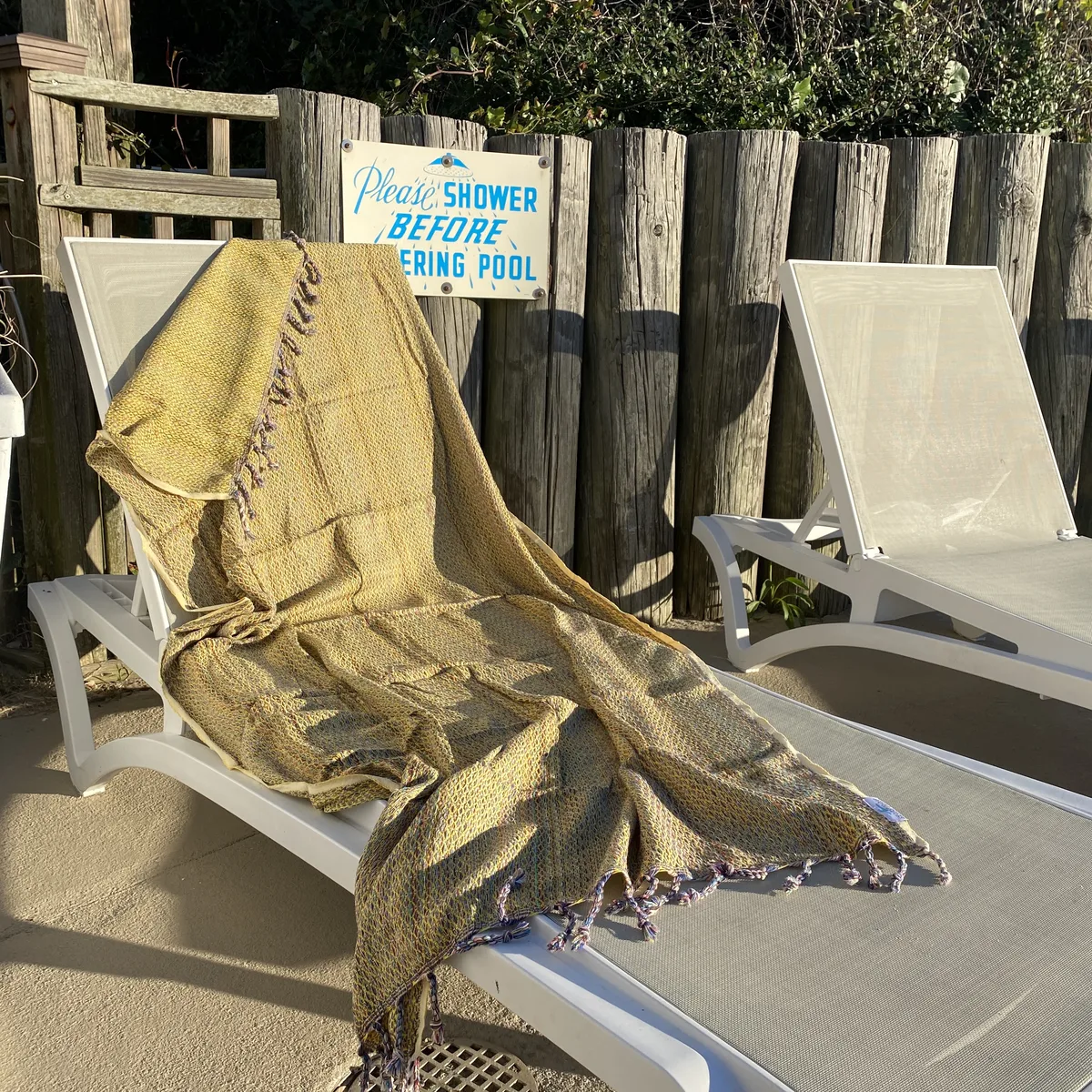
That matters because a Rag doesn't only live in the beach bag. Over a chair arm or the back of a sofa, the fringe is what makes it read as a throw rather than a towel someone forgot to put away. On the sand, it frames the pattern and marks the ends, so you can see which way you laid it out.
Fringe also suits some patterns more than others:
- Fine stripes look clean with fringe. The Ahi Rag (Grey), stone grey with fine multicolor stripes and fringe, is a good example.
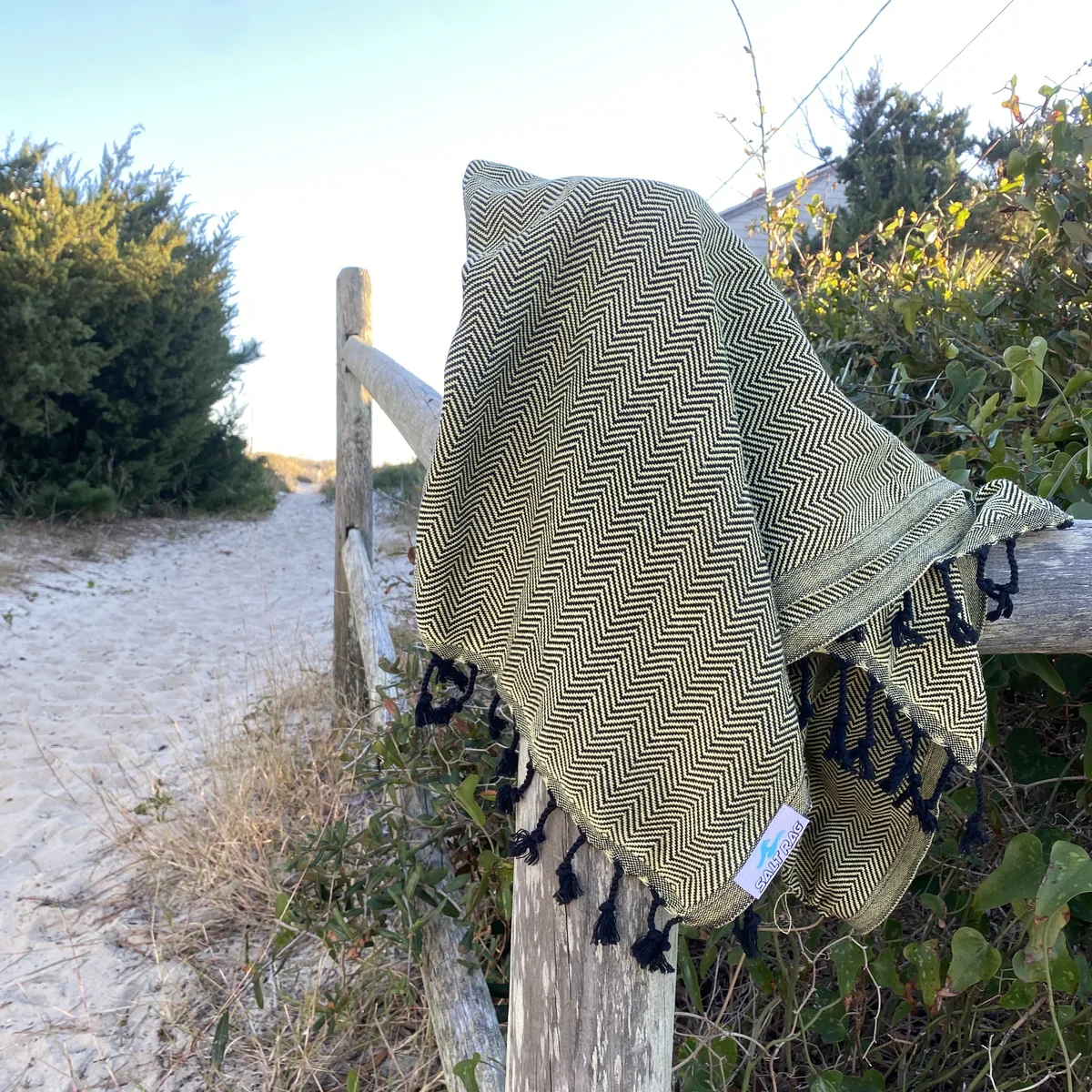
- Geometric weaves like a chevron get a natural border from the fringe. See The Royal Rag (Tan), warm tan with a chevron weave.
Living with fringe
Fringe asks for very little. A few habits help it stay neat:
- Let it hang. Fringe looks best when it falls naturally. When you drape a Rag over a chair or a rail, leave the ends free rather than tucking them under.
- Roll it in. When you roll a Rag for the beach bag, fold the fringed ends in first so they don't catch on zippers, sunglasses or the cooler handle.
- Don't pull loose threads. If a single thread works its way out, leave it be instead of tugging. Pulling can loosen the weaving around it.
- Watch the cleat. On a boat, fringe and hardware don't mix. Keep the ends away from cleats, hinges and anything that can snag.
- Follow the label. For washing and drying, follow the care label supplied with your Rag. If it's missing or unclear, email hello@saltrag.com before washing. More in the FAQ.
Frequently asked questions
Is the fringe just decoration? No. Fringe finishes the cut warp ends of a woven cloth so the weaving stays in place. The look is a bonus.
What's the difference between fringe and tassels? People use the words loosely. Usually "fringe" means the whole row of ends along an edge, and "tassels" means the individual knotted bundles within it.
Should I cut the fringe off? We wouldn't. On a woven cloth the fringe is part of how the ends are finished, so removing it can leave the edge with nothing holding it.
Do all Turkish towels have fringe? Many do, but not all. Some are hemmed instead. Every Salt Rag has knotted fringe on both short ends.
Hand-loomed in Kayseri
Fringe is one of those details that connects a towel to how it was made. Every Rag is hand-loomed in Kayseri, Turkey, and brought home to an East Coast kind of day in St. Augustine. You can read how the two fit together in our story.
WOVEN IN TURKEY. ROOTED IN FLORIDA.
Keep reading
Keep reading
How to Get Sand Off a Beach Towel