Turkish Towel vs Microfiber Beach Towels
Turkish towel vs microfiber beach towel isn't really a towel question. It's a materials question. One is cotton, woven flat. The other is a synthetic fabric made from very fine fibers. Both pack smaller than a classic thick beach towel, which is why they keep ending up in the same comparison. After that, they go their separate ways: how they feel, how they deal with sand and what they're good for once you're off the beach.
By Salt Rag · · Updated 2026-10-10
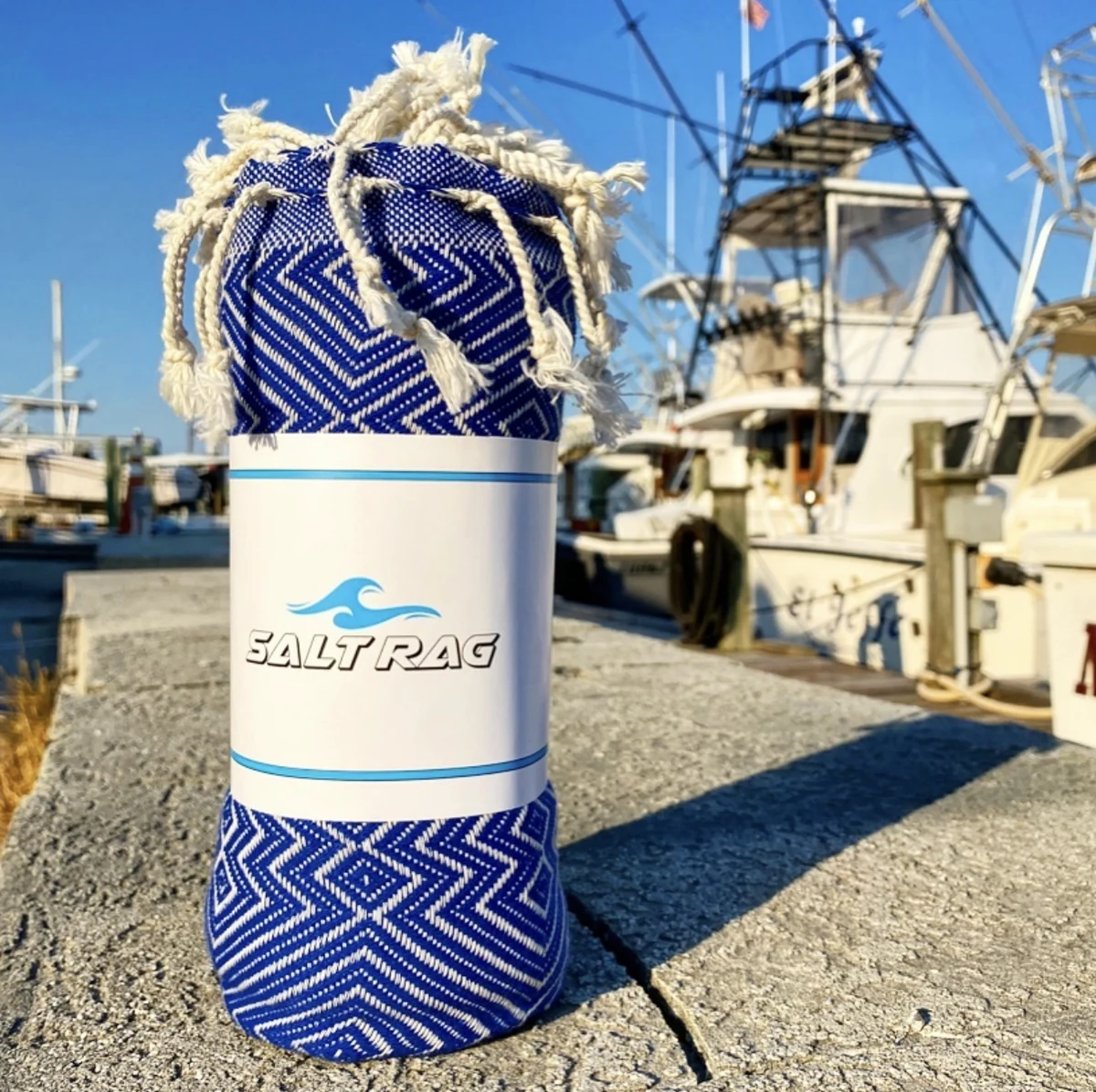
We make cotton towels, so we have a side. We'll still tell you when microfiber is the better pick.
Turkish towel vs microfiber beach towel: two different materials
Microfiber towels are synthetic. They're usually polyester-based and engineered to be thin, light and quick, and many come with their own zip pouch. They're built like gear, and that's the point.
A Turkish towel like a Rag is Turkish cotton, woven flat. There are no loops and no pile, just a woven cloth with knotted fringe finishing both short ends. Ours are hand-loomed in Kayseri, Turkey, and open to 40 × 70 inches. If you want the full construction story, The Flat Weave covers it.
Same job, different stuff. You notice the difference first in how they feel.
How each feels on skin after a swim
This part is personal, so trust your own hands if you can. Microfiber has a texture of its own: smooth on some towels, faintly suede-like on others. Some people find it catches on dry skin or fingertips. Others never notice. Either way, it tends to feel like gear rather than a towel.
Cotton feels like cotton. A flat weave is lighter and smoother than a terry towel, closer to a well-worn shirt than a bath sheet. It isn't plush, but it's familiar against salty skin when you come out of the water.
If texture matters a lot to you, that alone might settle it.
Sand: shaking it off before you pack
Microfiber varies a lot from towel to towel. Some smooth-faced ones shed sand easily. Fuzzier ones can hold on to fine grains, especially when they're damp. It's worth checking the surface before you buy.
With a Rag, the flat weave lets sand shake off. Grab two corners, snap it once downwind and most of the beach goes back where it came from. It's still a cotton towel, not a promise of a completely sand-free day. Wet sand sticks to anything, so let damp patches dry before you shake. Why a Rag has the short version.
Packing: when the smallest pack size matters most
Credit where it's due. If the absolute smallest, lightest pack is your top priority, microfiber usually takes this round. Think a long hike to a swimming hole, a backpack with no spare room or a carry-on where every inch is spoken for.
A Rag packs small for a full-size cotton towel. It rolls down to fit a beach bag alongside the sunscreen, a water bottle and a paperback. For a day bag, a boat bin or a weekend duffel, that's usually plenty. For fold-or-roll tips, see Packing Light.
Off the beach: wrap, chair throw, picnic
This is where cotton pulls ahead for us. A microfiber towel is a tool. Once you've dried off, it goes back in its pouch.
A Rag keeps working:
- A light layer over your shoulders when the breeze picks up after a swim. It's a light cotton layer, not a substitute for warm clothing or sun-protective gear.
- A seat cover for a truck bench that's been baking in the lot.
- A picnic spot on dry grass by the water.
- A throw over the porch chair once you're home.
Stripes and chevrons help here too. A patterned cotton towel looks fine left out on a chair, so it doesn't have to disappear between trips. After the water has more ways to use one.
Photo pending: Turkish towel worn as a light wrap after a swim
When microfiber is the better pick
We'd rather you buy the towel you'll actually use. Microfiber is the right call when:
- Weight and size beat everything. Backpacking, long trail swims, ultralight travel.
- It has to disappear. A pouch on a backpack strap or a corner of a gym bag.
- You just like the feel. That's a perfectly good reason.
When a Rag makes more sense
- You're carrying a beach bag, boat bag or pool tote anyway.
- You want cotton against your skin after a swim.
- You want the towel to double as a spot on the sand, a wrap or a throw.
- You want a towel that looks good draped over a chair, not just packed in a pouch.
FAQ
Is cotton or microfiber the best beach towel material? It depends on what you value. Microfiber leads on the smallest, lightest pack. Cotton flat weave gives you a full-size towel with a familiar feel that's also useful off the beach.
Microfiber or cotton towel for travel? For a backpack with no room to spare, microfiber. For a day bag or a weekend duffel, a flat-woven Rag packs small enough and does more when you get there.
Does a Turkish towel dry as fast as microfiber? We don't publish drying times. A Rag dries quickly when you hang it in the open air between swims, and humidity, airflow and how wet it got all play a part.
How big is a Salt Rag? 40 × 70 inches open, about 102 × 178 cm.
How do I wash it? Follow the care label supplied with your Rag. If it's missing or unclear, see the FAQ before washing.
Choosing a Rag
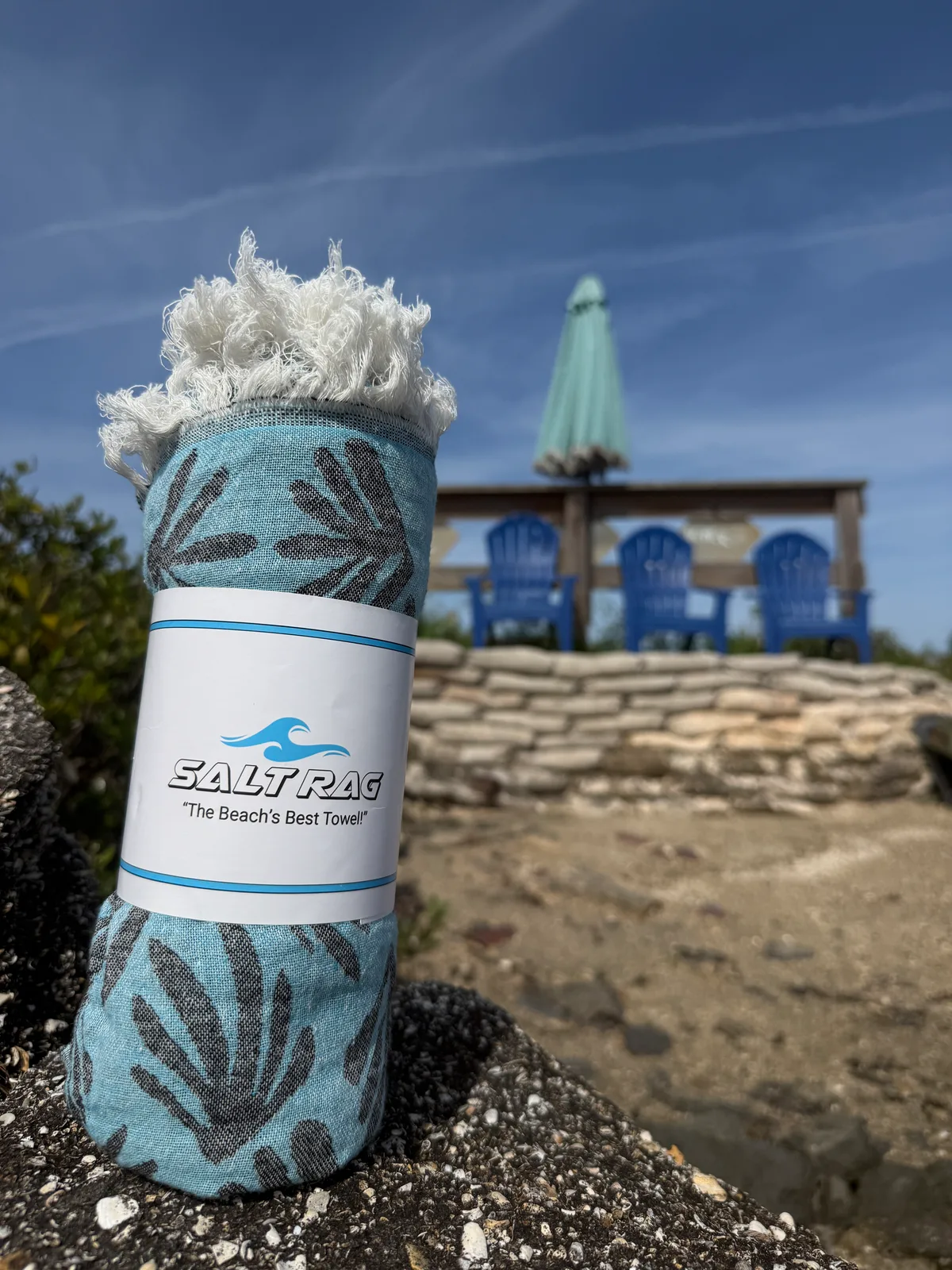
If cotton is your call, pick a pattern you'll want to see on the sand and over a chair at home. The Royal Rag (Turquoise) is bright turquoise and navy in a chevron weave. The Angler Rag (Blue) is deep blue on a seafoam base with stitched stripes. Shop the Rags for every color in stock, or build a stack for the whole beach bag.
Keep reading: Packing Light · After the water · The Flat Weave
Keep reading
Pool Towel vs Beach Towel: Do You Need Both?